

FLORIDA DECIDES: The Race to Succeed DeSantis and Shape the Sunshine State's Future
TALLAHASSEE, Fla. — The political landscape of Florida, a perennial battleground with outsized national influence, is preparing for a seismic shift. With Governor Ron DeSantis term-limited and set to leave office in January 2027, the 2026 gubernatorial election is not just an open-seat contest; it is a high-stakes referendum on the "Florida Blueprint" and a defining moment for both major parties.
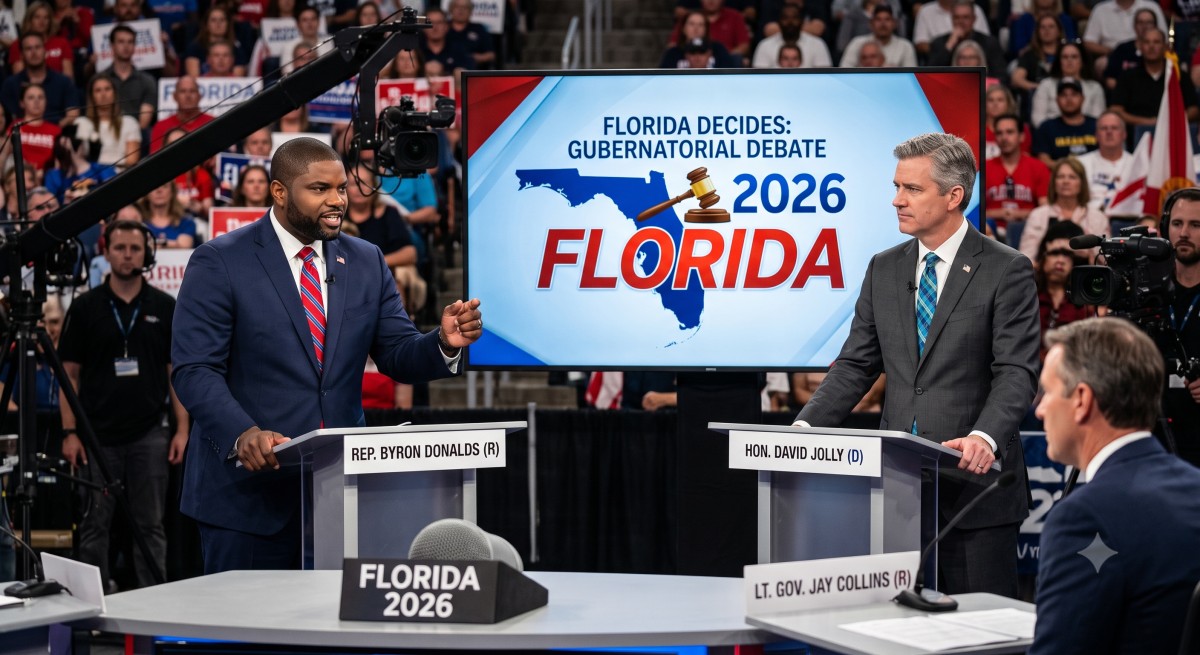
As the 2026 primary season accelerates towards its August 18th peak, the battle to become Florida’s 47th governor is already intense, marked by crowded fields, ideological skirmishes, and the long shadow of the outgoing incumbent.
The Republican Primary: Defining the Post-DeSantis Era
For Florida Republicans, who have enjoyed unprecedented control, the mission is singular: preserve and advance the "wins" of the DeSantis administration. The primary field is a competition to inherit the mantle of a leader who reshaped education, focused on cultural battles, and centralized executive power.
Rep. Byron Donalds (R): The Trump-Endorsed FrontrunnerLeading the Republican pack is U.S. Representative Byron Donalds, a charismatic conservative from Southwest Florida. Donalds, an early and vocal supporter of former President Donald Trump, has secured the all-important Trump endorsement, a powerful asset that has vaulted him to the front of polling and fundraising. His campaign is a robust defense of "freedom over mandates," focusing on parental rights, fiscal restraint, and border security.
The Challengers Lt. Gov. Jay Collins, appointed to the post in 2025, represents continuity within the executive branch. His campaign highlights his experience as a retired U.S. Army Green Beret and a loyal partner to DeSantis, positioning himself as the steady hand to continue the work.
Former Florida House Speaker Paul Renner and investment firm CEO James Fishback are also vying for the nomination. Renner, a key architect of DeSantis’ legislative agenda, emphasizes his record on school choice and limited government. Fishback, an outsider candidate, aims to capitalize on anti-establishment sentiment, running to "preserve Governor DeSantis' wins" against what he describes as radical ideologies.
The Democratic Primary: A Party Seeking a Path Forward
Florida Democrats, battling to overcome a significant registration disadvantage and a string of statewide losses, view the open seat as a rare opportunity for a reset. The primary is a critical test of their ability to unify behind a candidate who can appeal to the state’s moderate and diverse electorate.
Hon. David Jolly (D): The Centrist Option Leading the Democratic discussion is Hon. David Jolly, a unique figure who represented Florida's 13th congressional district as a Republican before splitting with the party and later becoming a Democrat. Jolly, now a frequent political commentator, is running as a pragmatic centrist, appealing to disaffected Republicans, independents, and Democrats weary of ideological battles. His campaign focuses on property insurance reform, environmental protection, and a return to bipartisan governance.
Other Declared Candidates State Rep. Dotie Joseph, a Haitian-American attorney from North Miami, represents the party's progressive base. Her campaign emphasizes social justice, affordable housing, and healthcare access, aiming to energize voters of color and urban communities. Orange County Mayor Jerry Demings, previously a sheriff, is also a potential candidate, offering executive experience from one of Florida’s most populous and diverse counties.
Key Issues Defining the Contest
Regardless of the eventual nominees, several core issues will dominate the general election debate, each intertwined with Florida’s complex economy and unique demographic makeup.
-
The DeSantis Legacy and Education: The defining theme of the race will be the assessment of Ron DeSantis' tenure. Republicans will advocate for continuing policies like the Parental Rights in Education Act, while Democrats will focus on teacher shortages, book challenges, and what they term "government overreach" into classrooms.
-
Affordability and Insurance: Florida’s property insurance crisis is perhaps the most pressing economic challenge. Both parties must offer viable solutions to rising premiums and a shrinking market, an issue that affects every homeowner. This, along with inflation and housing costs, will be a critical battleground.
-
Environment and Water Quality: As a peninsula state, water quality, Everglades restoration, and coastal resilience are perennially important. Candidates will need to articulate how they will balance economic development with environmental stewardship.
-
Health Care and Abortion: Access to health care, including the fate of Florida's six-week abortion ban, will be a major driver, particularly in the general election, where a proposed constitutional amendment could be on the ballot alongside candidates.
The coming months will be a whirlwind of debates, advertisements, and community engagement as these candidates strive to define themselves to a Florida electorate that remains, as always, both pivotal and unpredictable.
What's Your Reaction?
 Like
0
Like
0
 Dislike
0
Dislike
0
 Love
0
Love
0
 Funny
0
Funny
0
 Wow
0
Wow
0
 Sad
0
Sad
0
 Angry
0
Angry
0

Main Stream Media is a MESS! Press What Matters is of the people, by the people and for the people. The first amendment gives every United States citizen the right to be a journalist as free press and so does Press What Matters! Sign up today and post your own news article, story or video.








Comments (0)