

Medicaid Fraud Schemes in Ohio: A Growing Concern Draining Public Resources
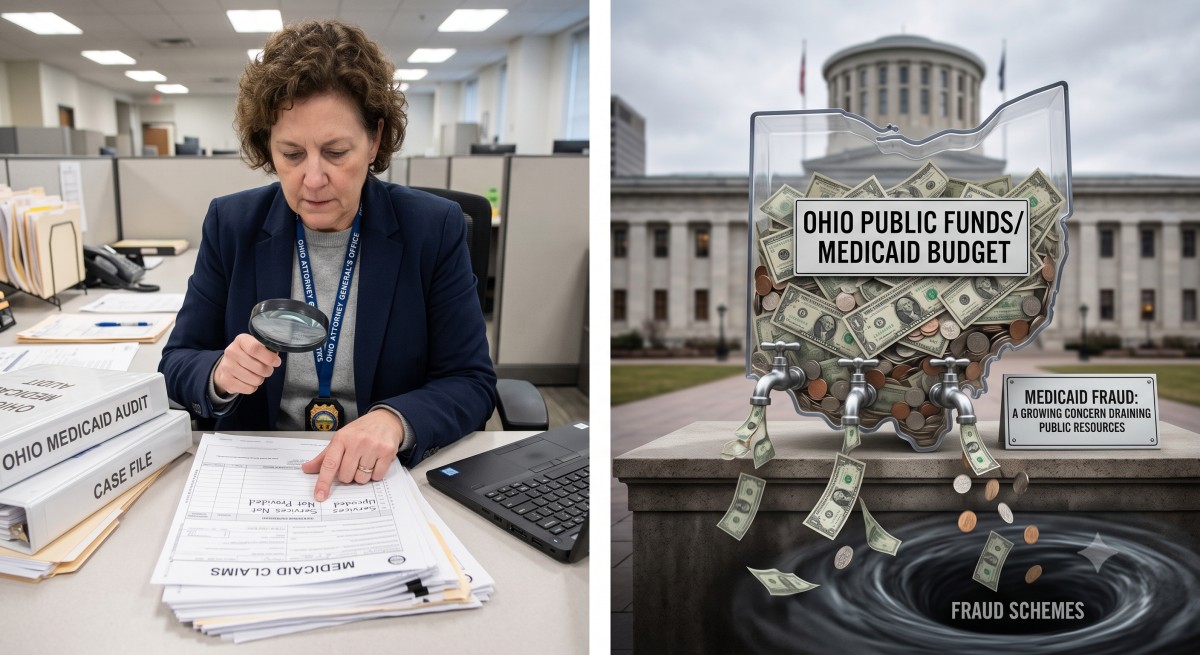
Ohio’s Medicaid program, which provides healthcare coverage to millions of low-income residents, has become a target for widespread fraud, waste, and abuse. In 2026, state and federal authorities have ramped up enforcement actions, but critics argue that systemic weaknesses continue to allow millions — and potentially hundreds of millions — of taxpayer dollars to be stolen.
Scale of the Problem
Ohio’s Medicaid program serves over 3 million people and has an annual budget in the billions. Fraud cases often involve:
- False billing for services never provided (especially behavioral health and therapeutic services for children).
- Identity theft of Medicaid IDs to submit phony claims.
- Kickback schemes and overbilling by providers.
- Organized fraud rings, sometimes linked to specific communities or networks exploiting language barriers or lax oversight.
Recent examples include a 2026 sweep charging multiple providers with stealing over $300,000 in one case cluster alone. Nationwide Medicaid fraud enforcement actions have also swept up Ohio defendants accused of schemes totaling billions when aggregated.
In one high-profile pattern, investigators found spikes in billing for services like therapeutic behavioral support. A Westerville physician was charged after allegedly using children’s Medicaid IDs unlawfully and billing for unrendered care, resulting in nearly $200,000 in losses.
Why Fraud Is Rampant
Experts and whistleblowers point to several contributing factors:
- Complex billing rules that are difficult to monitor in real time.
- High volume of claims, making manual audits challenging.
- Language and cultural barriers in some immigrant communities, which fraudsters allegedly exploit.
- Insufficient proactive data analytics until recent improvements.
- Political and resource constraints — some whistleblowers claim warnings to legislators and the Attorney General’s office were slow-walked.
One whistleblower described it as a “national embarrassment,” noting that tips about massive fraud in publicly funded daycares and provider networks were flagged as early as late 2025 but faced delays.
Law Enforcement Response
Ohio Attorney General’s Office and federal partners have increased efforts:
- In 2025, the state’s Medicaid fraud unit received over 1,494 allegations, leading to 153 indictments, 110 convictions, and $27 million recovered.
- 2026 has seen continued sweeps, including six providers charged in one recent action.
- Data analytics and tip lines are being emphasized to detect anomalies faster.
Despite these numbers, recovery rates often represent only a fraction of total losses, and prevention remains a challenge.
Political and Policy Fallout
The fraud issue has drawn bipartisan attention but also criticism:
- Republicans and Democrats both support stronger enforcement.
- Calls for legislative reforms include better provider screening, real-time claim monitoring, and harsher penalties.
- The scandals add to broader concerns about government spending efficiency in Ohio, especially alongside other high-profile issues like the lingering HB6 utility corruption case.
Some rural and urban lawmakers have pushed for audits of high-risk programs, while advocates stress that fraud hurts legitimate beneficiaries by straining program resources.
What’s Next?
As investigations continue, Ohio officials promise more aggressive action in the second half of 2026. The Attorney General’s office and Department of Medicaid are expanding use of predictive analytics. However, experts warn that without sustained funding, stricter oversight, and cultural shifts in compliance, fraud schemes will persist.
Taxpayers and patients deserve better. Medicaid fraud not only wastes money meant for vulnerable populations but also undermines trust in public programs. Ongoing vigilance and reforms will be critical to protecting Ohio’s healthcare safety net.
What's Your Reaction?
 Like
0
Like
0
 Dislike
0
Dislike
0
 Love
0
Love
0
 Funny
0
Funny
0
 Wow
0
Wow
0
 Sad
0
Sad
0
 Angry
0
Angry
0
Main Stream Media is a MESS! Press What Matters is of the people, by the people and for the people. The first amendment gives every United States citizen the right to be a journalist as free press and so does Press What Matters! Sign up today and post your own news article, story or video.





Comments (0)